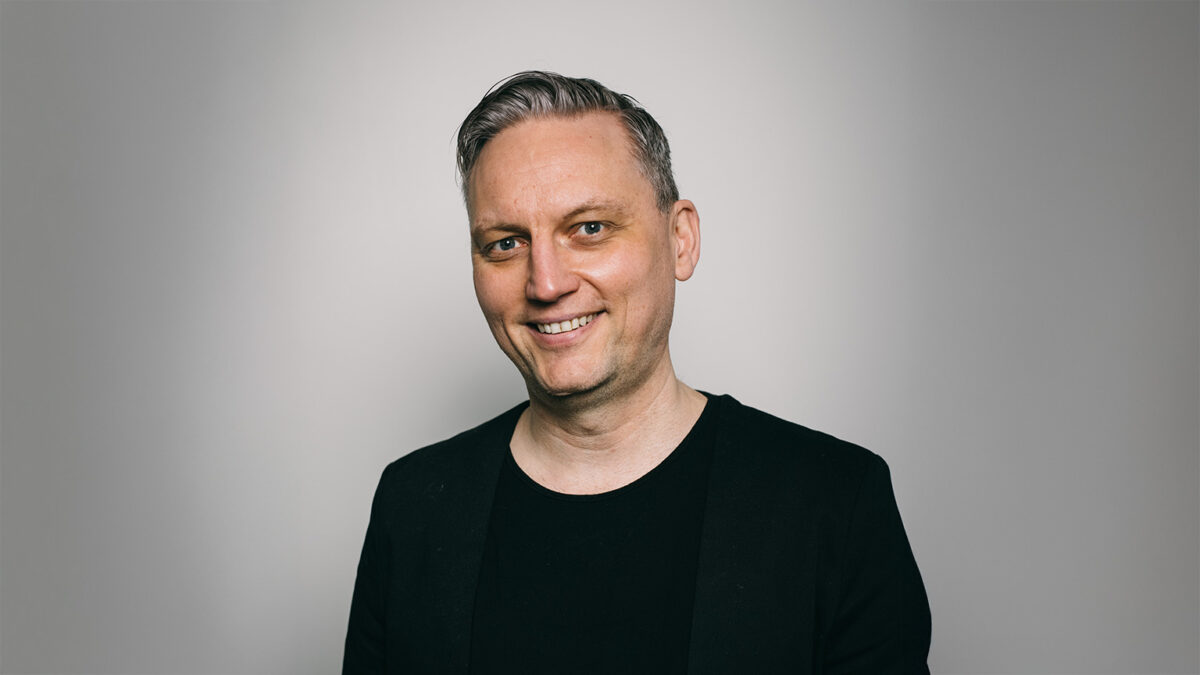



An interview with design advisor Jesse Maula on the evolving role of design in physical security.
LOUHE has recently launched a refreshed product experience for the Detection & Response and Insights applications, which is much more than just a new look. The update was created by a designated design team, with a strong focus on usability, visual clarity, and adaptability across environments. In this interview, design advisor Jesse Maula shares his thoughts on the role of design in the physical security domain and reflects on how principles of clarity and usability can shape user interfaces, such as LOUHEs recent update.
According to Maula, the timing of a UI redesign in products like LOUHE’s is often driven by multiple factors. “LOUHE had already been working on sharpening the brand and messaging,” he explains. “The UI refresh is a natural next step. The product was at the right stage in its development to make this possible, and there was also insightful customer feedback. So it made sense to act.”
With more than 20 years of experience in service design, including nearly a decade spent growing Idean in Silicon Valley as co-founder, Maula brings a long-term perspective to the role of design in shaping technology. His belief in Scandinavian design principles is clear: “Form and function go hand in hand. Especially in a domain like physical security, you have to assume that your users are coming from very different backgrounds. Some are tech-savvy, others aren’t. The interface has to make sense to all of them.”
Design That Supports Real Decisions
In time-critical environments such as security operations, well-designed interfaces can make a significant difference. “When you’re under pressure, clear language and visual cues make a huge difference. You immediately understand what’s going on,” Maula says.
“When you’re under pressure, clear language and visual cues make a huge difference. You immediately understand what’s going on,”
For example, LOUHE’s Operator View now includes natural-language descriptions of detections, and new icons help users quickly identify the nature of each ticket, even from the list view. These small yet thoughtful changes demonstrate how design can minimise friction and improve clarity in real-world applications.
Visual simplification also plays a role in accessibility. A new Focus Mode supports usability on lower-resolution screens, just one of the ways visual simplification supports more flexible use.
Making Complex Data Actionable
The role of design extends beyond the surface. In complex domains like physical security, making data actionable is key. “This is where design plays a big role,” says Maula. “If the system highlights patterns, like repeated access attempts at strange hours, it can help prevent issues before they become incidents.”
“If the system highlights patterns, like repeated access attempts at strange hours, it can help prevent issues before they become incidents.”
In the case of LOUHE, one of the long-standing goals is turning complex security data into understandable and actionable insights. LOUHE’s interface, for instance, now includes visual models such as annotated floor plans that contextualise key issues. “You don’t need to be a specialist to spot that something’s off,” Maula adds.
Balancing Simplicity and Depth
For design to support both novice and professional users, simplicity must be balanced with depth. “You should show what’s essential first,” Maula explains. “Then, if users want to explore more detail, they can drill down.”
In LOUHE’s case, this layered approach ensures that the interface remains intuitive without limiting the powerful capabilities professionals rely on. “At the end of the day, floorplans are floorplans. The redesign aimed to make the visual models intuitive across different environments, drawing from academic research and user feedback.”
Design That Works and Looks Good
A strong visual language supports usability and perception alike. “In design, you should look closely at grouping, navigation flows, and how functions are organised,” says Maula. “When it’s done right, design isn’t just functional, but it feels right.”
The refreshed UI at LOUHE embodies this idea by focusing on clarity and professionalism in a way that resonates with modern digital experiences. As Maula sums it up: “People are using all kinds of digital tools these days, so our standard needs to reflect that. It’s about meeting user expectations.”
With its latest update, LOUHE reinforces a commitment to purposeful design, building on the foundation laid by its evolving brand. “The redesign is a continuation of the work LOUHE started with the brand,” Maula says. “The next step was to produce an experience that reflects the same values and direction.”